
A clear, step-by-step guide to sourcing genuine Indian essential oils safely — what to ask for, how to verify quality, and how payment and shipping work.
Request a sample & quote →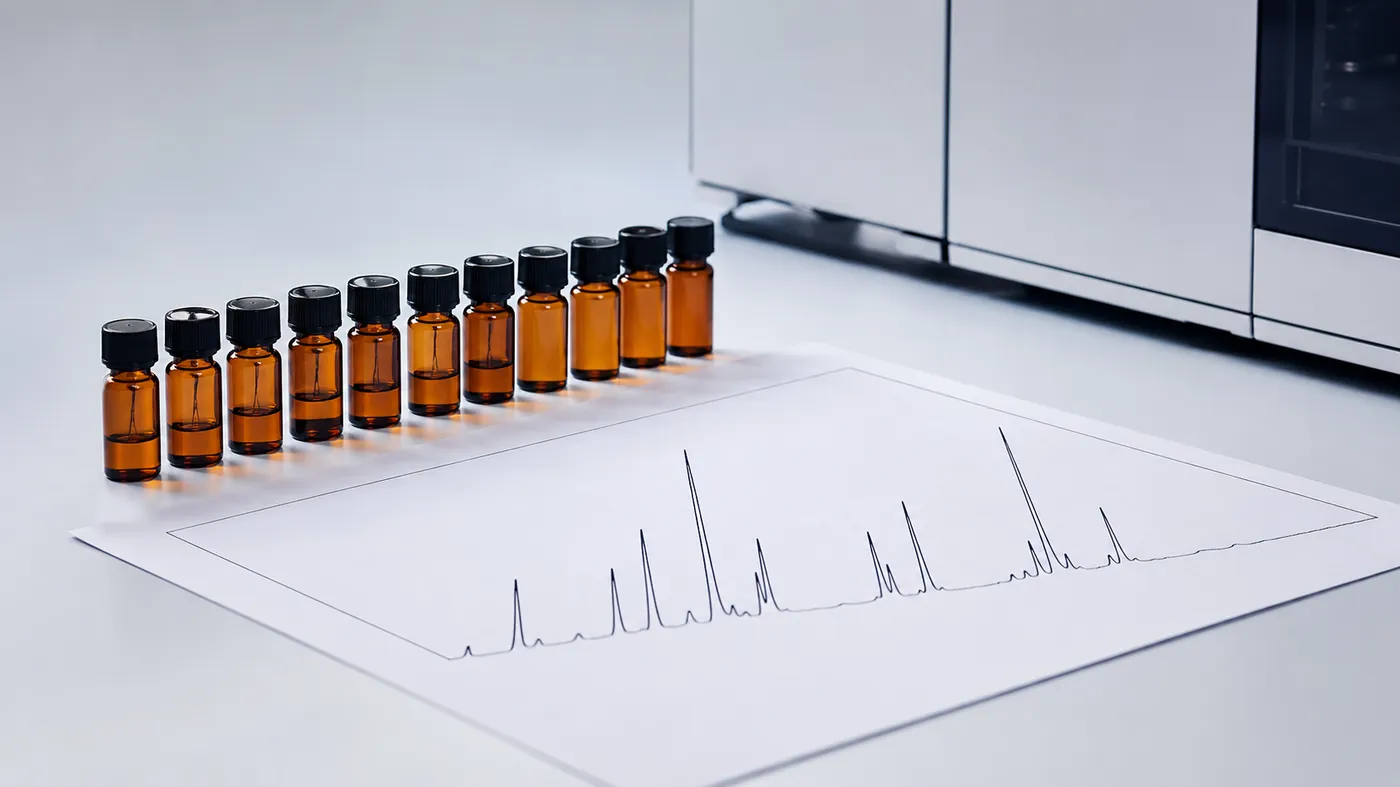
Work with a registered company (with IEC and GST) that can show real documentation. A verifiable company reduces your risk from the start.
Ask for a sample with its GC-MS report and COA. The sample proves the oil's quality regardless of branding.
Test the sample — and, crucially, the delivered batch — by independent GC-MS. This is the single best protection against adulteration. A good exporter will invite you to verify at their cost.
Confirm price, quantity, packing and Incoterm (FOB or CIF). Get a Proforma Invoice with validity and lead time.
Use an advance payment or a Letter of Credit at sight for a new relationship. Release balance against a tested batch where possible.
Your shipment should arrive with GC-MS, COA, MSDS, Commercial Invoice, Packing List and Certificate of Origin — plus any market-specific certificates.
How do I import essential oils from India?
Choose a registered exporter, request a documented sample, verify it by GC-MS, agree terms and Incoterm (usually FOB or CIF), pay by advance or LC, and receive the goods with full export documentation.
What documents should the exporter provide?
GC-MS, COA, MSDS, Commercial Invoice, Packing List and Certificate of Origin — plus any market-specific certificates.
How do I avoid adulterated oil?
Insist on independent GC-MS of the delivered batch (not just a sample), buy from a documented source, and verify in your own lab.
What payment terms are normal?
Advance payment or a Letter of Credit at sight are standard for new export relationships.
What is the difference between FOB and CIF?
FOB means you pay freight/insurance from the Indian port; CIF means the exporter includes freight and insurance to your port.
We'll send a documented sample and answer every question above for your specific order.