
The single biggest risk when buying essential oils internationally is adulteration. Here is exactly how a professional buyer confirms purity before paying.
Natural essential oils are expensive, and that creates a temptation to cut them — with cheaper oils, synthetic aroma chemicals, or carrier oils. For a buyer, an adulterated oil means failed formulations, rejected batches, and reputational risk with your own customers. The good news: purity is verifiable, and a serious supplier will make it easy.
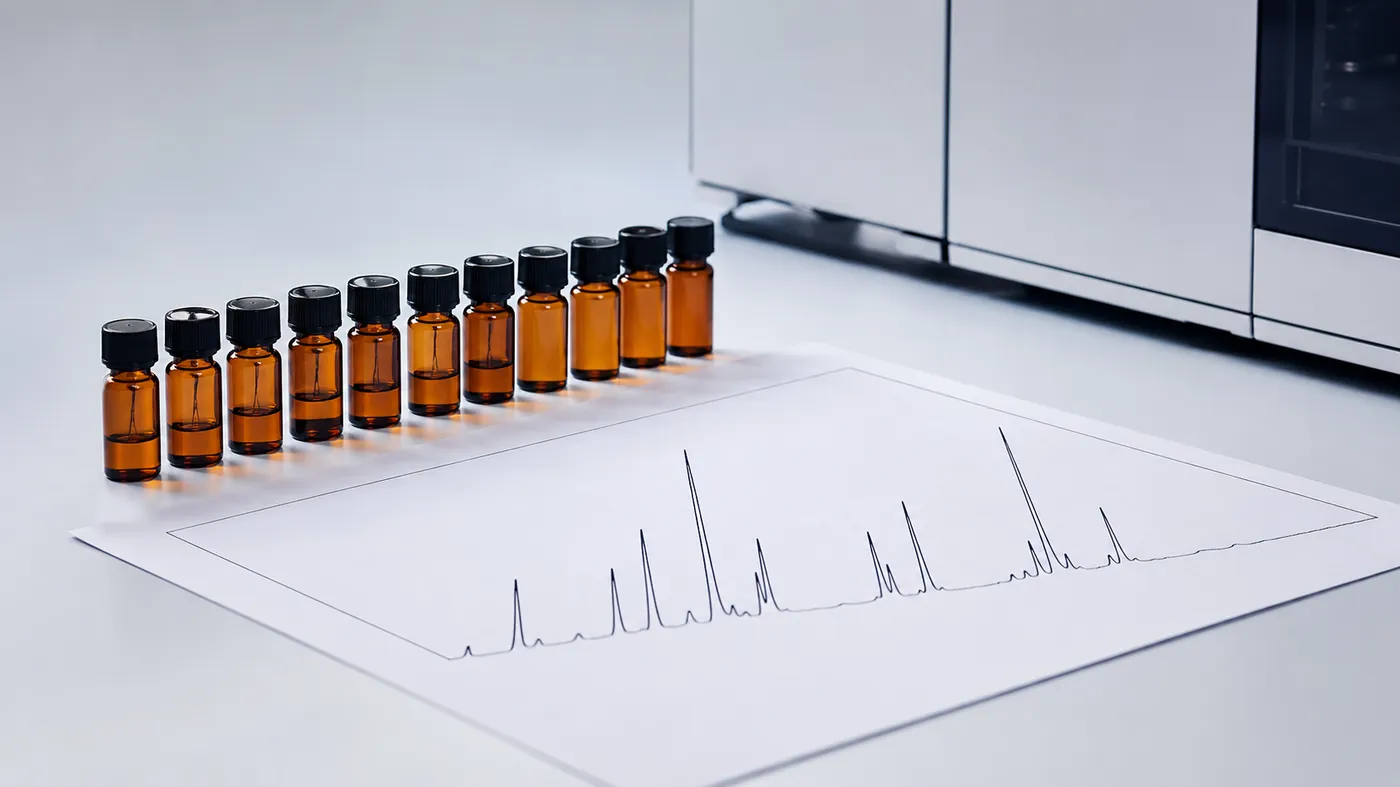
Gas Chromatography–Mass Spectrometry (GC-MS) breaks an oil into its individual chemical constituents and shows their percentages. Every genuine oil has a characteristic "fingerprint" — for example, a real lemongrass oil shows high citral. If synthetics or diluents are present, they show up. A trustworthy exporter issues an accredited-lab GC-MS report for the specific batch you're buying, ideally before the goods ship.
The COA lists physico-chemical parameters — specific gravity, refractive index, optical rotation — which should fall within the known range for that oil and species. Values outside the expected band are a red flag.
The strongest signal of a confident supplier is a simple offer: test the oil yourself, in your own lab, before you pay. If a supplier resists independent verification, walk away.
The report should travel before the goods — not after.
Approve a sample, then require that the bulk matches it — in writing, backed by batch GC-MS and, on first orders, pre-shipment inspection. This closes the oldest trick in the trade: a perfect sample followed by a diluted shipment.
Purity isn't a matter of trust — it's a matter of evidence. Ask for GC-MS and a COA per batch, verify independently, and hold bulk to the approved sample. Any supplier worth working with will make all three effortless.
Request a documented sample and verify our quality in your own lab, at our cost.
Request a sample →